4 KPI To Drive
Repair Shop Production
You need a highly productive staff to manage the flood of rental returns and school repairs piled everywhere over the summer. As I’ve mentioned in previous articles, crafting financial incentives to ensure your rental fleet is ready is one critical step toward a productive shop, effective KPIs is another.
Key Performance Indicators (KPIs) are a daily measuring tool of your repair staff’s effectiveness of increasing your bottom line - and theirs. KPIs allow a non-subjective way to tell your techs they’ve done good, or have room to improve. The right KPIs, however, can be tricky. Here are the 4 KPIs I use in my shop to ensure every tech is operating to their fullest potential.
KPI #1: Time at work / time at bench. Clocking in and out for the day is easy and gives you the total amount of time at work. Repairs are never completed by technicians who don’t show up, but it’s impossible for any tech to be at their bench all day long. Phone calls, triage, parts ordering, staff interruptions, and more detract techs from their bench every day. It’s essential to also track time at their bench. The old idiom of, ‘everything left unmeasured will never improve’ applies; if you are not tracking their bench time, the amount of time they spend there will never increase. Instead, the amount of time it takes them to do the other nonproductive tasks will increase.
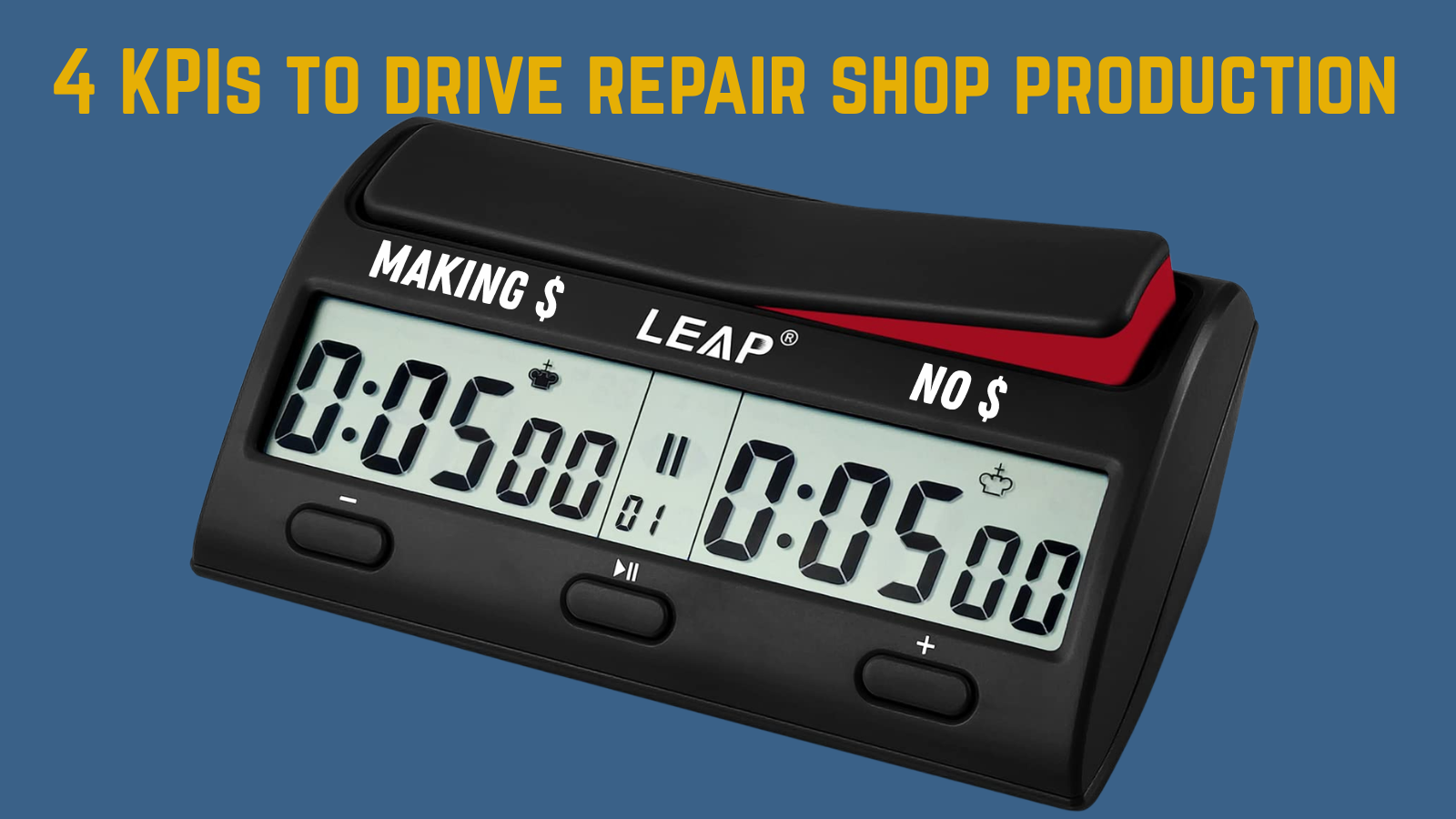
It is not easy to measure bench time. Software tools help and have proven effective in my shop, but before the software, a simple chess timer proved effective. A chess timer measures the time each player takes to move - I simply relabeled each side of the clock to “Making $” and “No $.” As the day goes on, every tech could see exactly how much time they were spending at productive tasks vs nonproductive ones and their focus immediately improved.
KPI #2: Bill Rate per hour worked. This one uses a technician’s total hours at work (not their bench time) and is divided by the amount they billed out. Our goal is 5.5 hours of billed work each day during the 9 normal months of the year, and 6.75 hours over the summer. The remainder of time is taken by those nonproductive tasks, and that’s normal. Set a realistic expectation and this KPI becomes a driver, not a hinderance.
KPI #3: Timely Repairs. One factor of customers offering their repeat business is getting their instrument back in a timely manner. This includes the store owner getting their rental returns done in a timely manner. Every instrument should have a repair ticket with a check in and invoiced date, the time between these is the measurement. Every shop will have slightly different expectations here, but about 1 week is a standard goal.
KPI #4: Quality of Finished Work. This KPI applies in shops where a foreman is inspecting every completed repair. This foreman has their own KPIs and every time a tech presents an instrument for final approval, time is taken away from the foreman. Don’t get me wrong, these interruptions are intentional and necessary, but I want to instill an unusually high attention to detail. I do not measure the number of times an instrument is brought for help solving a problem, I’m only referring to the number of times a repair is presented for final approval.
The measurement is simple, it either passed or it didn’t. If it passed, I offer an incentive of $5.00 for that instrument. If it didn’t pass, no financial gain to the technician. Keeping a note on your phone or setting up a Quality Control matrix in your repair software keeps track of what instruments receive the reward.
These 4 simple KPIs will drive the productivity of your repair shop and ensure the mounds of repairs you’ll have this summer are done in an effective and timely manner.
Assuming techs are difficult to find, and more than a few of them have this concern, what is your bill rate?
Here’s what I know: 14 plumber companies will have a tradesman at my toilet inside an hour. Each will charge at least $75 to show up, then at least $100/hour from there. I also know I’m the only repair tech in a very large circle around me and I have 200 instruments in my shop right now. From a simple Econ 101 standpoint, who should be charging more?
If your bill rate is not over $100 an hour… do yourself a favor and send a text to your manger right now. You’re reading this because you know the scarcity of instrument repair techs, help yourself keep those you have by allowing them a chance to earn a good living as incentive to stick around!